A successful parkrun at Carisbrooke Park for World Refugees Day

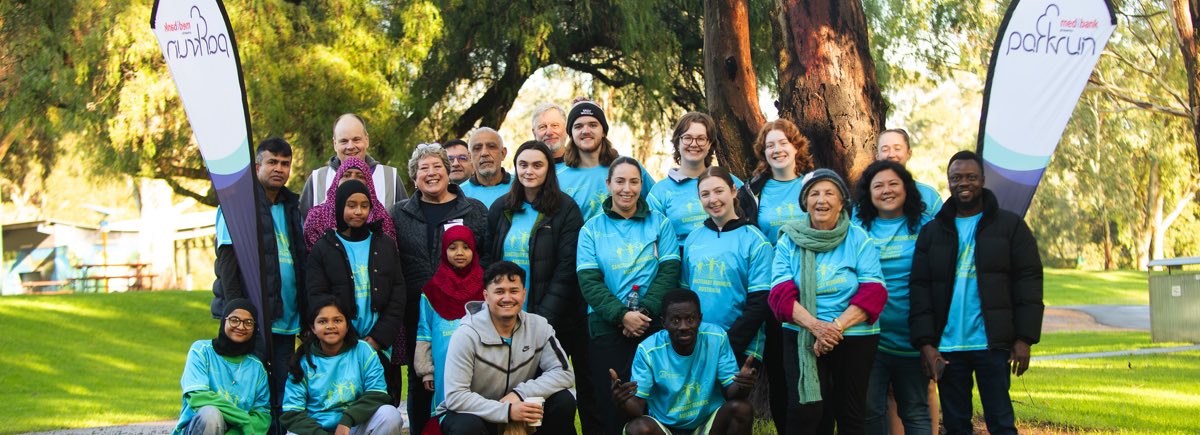
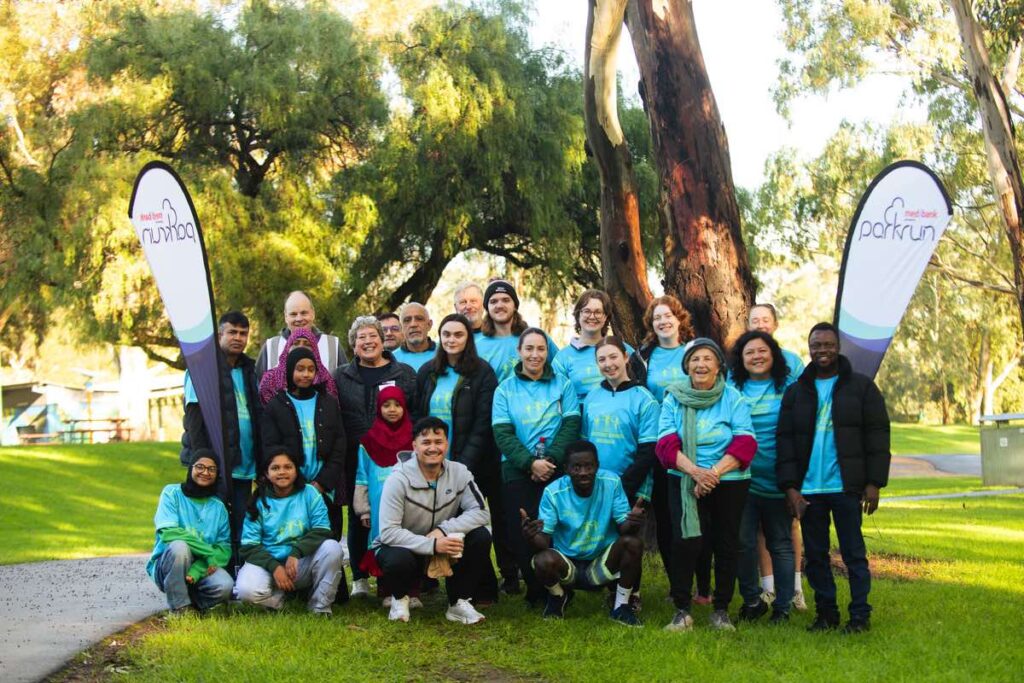
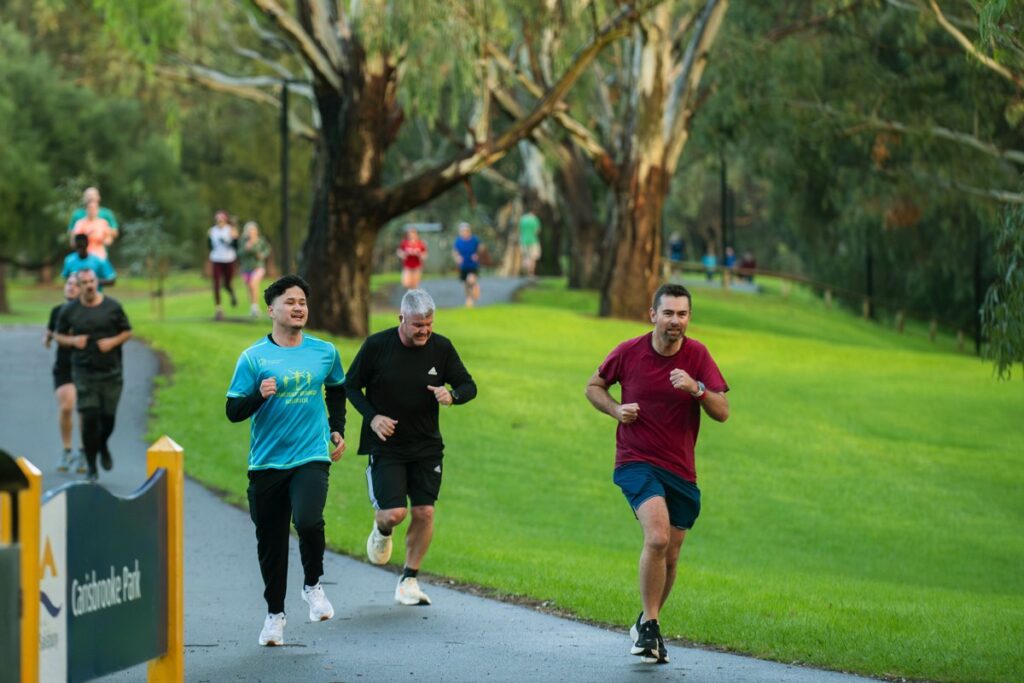
Group of people at Parkrun

By Meredith Edwards, Chair of Justice for Refugees SA

It is often hard for people who have recently arrived in Australia to know how to link in with mainstream Australian weekend activities. Following the example of Sanctuary Runners in Ireland and the Refugee Council of Australia (RCOA), Justice for Refugees SA trialled a Parkrun at Carisbrooke Park in Salisbury North on Saturday 20th June. This event was held to coincide with World Refugee Day.


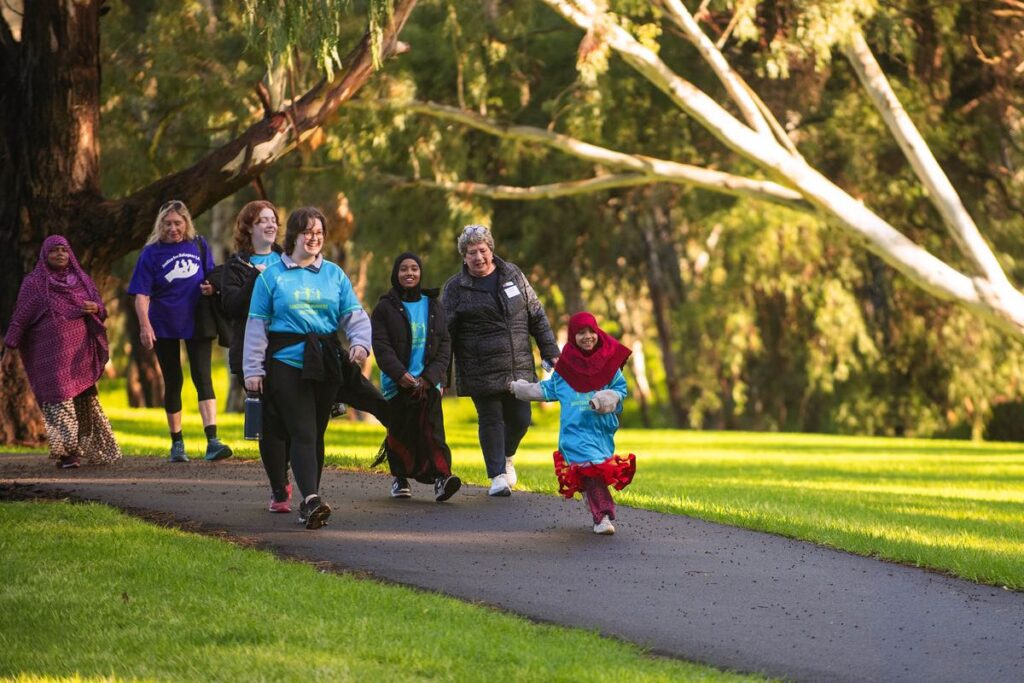
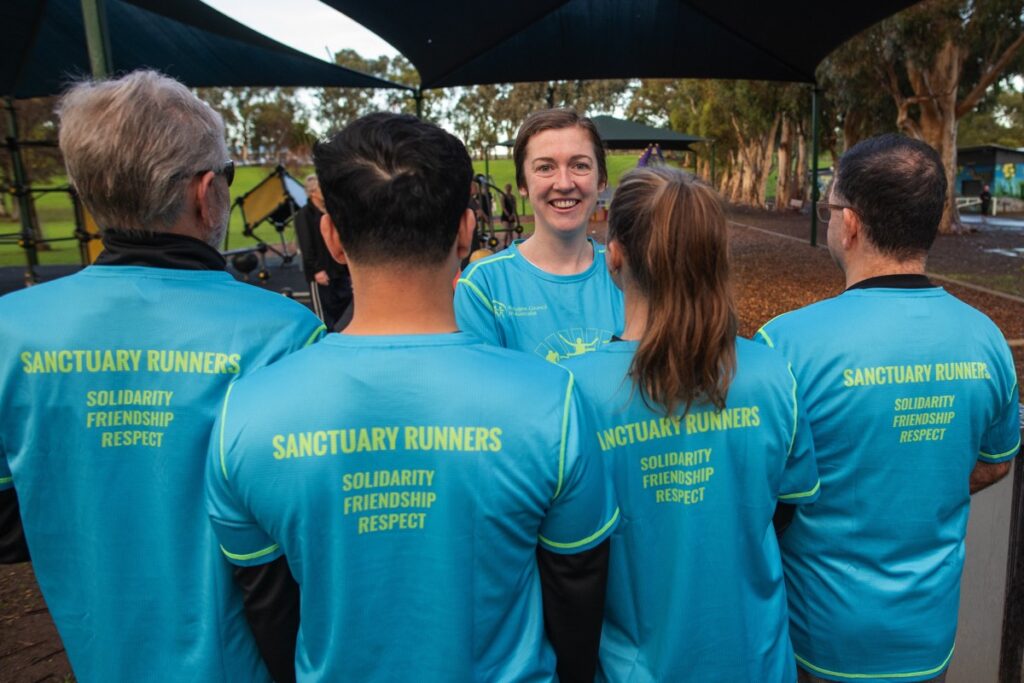
We invited  recent migrants, refugees and supporters to run or walk together with regular participants on the 5km Parkrun, which set out at 8am. We had a great turn out on the day, with an extra 40 or more people attending. Some ran, some walked the 5km and all were noticeable thanks to donation of Sanctuary Runners T-shirts by RCOA. What was also noticeable was the welcoming smiles and encouraging comments by regular parkrunners.  The smiles on the faces of all participants was also noticeable. This is what encouraging a sense of belonging is about. All walkers and runners were greeted at the end with special cupcakes. We are hoping that enough people will want to join future events so we can establish a “Sanctuary Runners” group in Adelaide.

This successful event would not have happened without the collaboration and support of the City of Salisbury, Jonathan Morgan the director of the Carisbrooke Parkrun on the day, Circle of Friends Australia (COFA) and Welcoming Australia. Thank you to all who helped make this event happen.  “Sanctuary Runners” was established by a group of runners and walkers in Ireland as a way to include refugees and recent migrants to participate in a mainstream community activity.   Paul Power, the CEO of the Refugee Council of Australia established the first of the Sanctuary Runners in Australia to connect people through exercise and friendship. We also thank Paul for his help in organising the event.

Please think about getting involved and/or encouraging others. If there is enough interest, we will hold a walk or run together, initially once a month as Sanctuary Runners.  I still have T-shirts available and we can order more.

You can contact me, Meredith Edwards, on the Justice for Refugees SA email  or by phone 0458595648.

You can directly register for Sanctuary Runners via this link.

For more information on Sanctuary Runners click here.

Refugee Week 2026: A Million Stories

Over the last few weeks, Judi and I have been on a mid-year break, visiting family and friends interstate. The travel was fun — by plane, then train, then car.

As we loitered in the main street of a small country town, my attention was drawn to a poster on the noticeboard outside the Community Hall. Refugee Week 2026: A Million Stories. Someone had blu-tacked it slightly crooked, which felt about right for this year’s celebration. Nobody straightened it. People had other things on their minds.

It is June, and in Australia that means winter — cold mornings, shorter days, and the particular kind of political chill that has been settling over the immigration debate for the better part of two years. The newspapers and internet feeds scream numbers at us. Migration caps. Net overseas arrivals. Housing shortages blamed on the wrong people in the wrong tone of voice. Politicians competing to sound toughest on borders, as if compassion were somehow a character flaw.

Into all of that, quietly, Refugee Week arrives — as it always does.

This year it carries extra weight. Forty years ago — November 1986 — a couple of hundred people walked through Sydney in a street procession that nobody much noticed. Afghan families. Eritrean families. Vietnamese families. A picnic in the Domain afterwards, organised by a small charity called Austcare and a retired army general who thought the world should do better. It was a modest beginning for something that would eventually spread to more than twenty countries. Australians, it turned out, have a talent for welcome — even if their governments and elected politicians sometimes forget it.

And now, in 2026, Australia has just issued its one millionth humanitarian visa since the end of the Second World War. One million people who fled something — war, persecution, the particular terror of having no good options — and arrived on these shores to begin again.

One million stories, most of them unknown to the people sitting next to them on the bus, in the waiting room, at the school gate.

Even on holiday, with my laptop closed on the desk at home, the WhatsApp messages find me. A family waiting patiently in Iran for their Australian refugee visas after escaping the trauma of Afghanistan. Then, suddenly, one morning, officials arrive at their door with the news that they can no longer stay. Bundled onto a bus heading towards a border they never wanted to cross again, they are now back in hiding in their own country, reaching out again for help. I have nothing to offer except short messages of concern — and the hollow feeling that comes with pressing send.

I’ve been thinking about that number ever since. One million. It makes me go quiet.

I’ve been volunteering with COFA and CRSA  long enough to know that behind every statistic is a Tuesday afternoon at my desk. A form that doesn’t make sense, submitted to a bureaucracy nobody asked them to understand. A home visit where a child does homework at the kitchen table while her parents try to decode a Centrelink letter. Conversations online or in person with families who made it, and families still waiting — and the complicated feelings that live in the space between those two sentences.

There are days when the gap between those two sentences feels like a chasm.

That family in Iran — let’s call them the family I cannot help — are not a statistic. They are a father who once had a job to support his family, a mother who once had a kitchen, children who once had a school. They escaped one country at war, waited patiently in another, and were then bundled onto a bus towards a border they never wanted to cross.

My WhatsApp response took about forty seconds to type. I stared at it for a long time before I pressed send. Thinking of you. Stay safe. We are here. Three sentences that meant everything and changed nothing.

This is the quiet shame of Refugee Week — the part that doesn’t appear on the posters.

And yet.

Forty years of this week happening — stubbornly, reliably, on the same patch of the calendar every June — tells me something. It reminds me that Australians keep showing up. Not the politicians, not always. But the people. The volunteers. The community circles. The retired army general in 1986 who thought a picnic in the Domain was worth organising. The COFA members in Adelaide who have been sitting across kitchen tables from newly arrived families for more than two decades, helping them decode the forms and the systems and the silences.

One million humanitarian visas. One million Tuesday afternoons.

I straightened the poster in my mind as we walked on down the main street of that small country town. Judi walked quietly by my side. The winter sun was pale and thin, but it was there. Somewhere on the other side of the world, a family I cannot help right now is waiting again. Somewhere in Adelaide, a family I can help was also waiting — and next week I would be back at my desk.

That will have to be enough. For now, it is.

Bob Wilson

Join us to Celebrate Australia’s Diversity

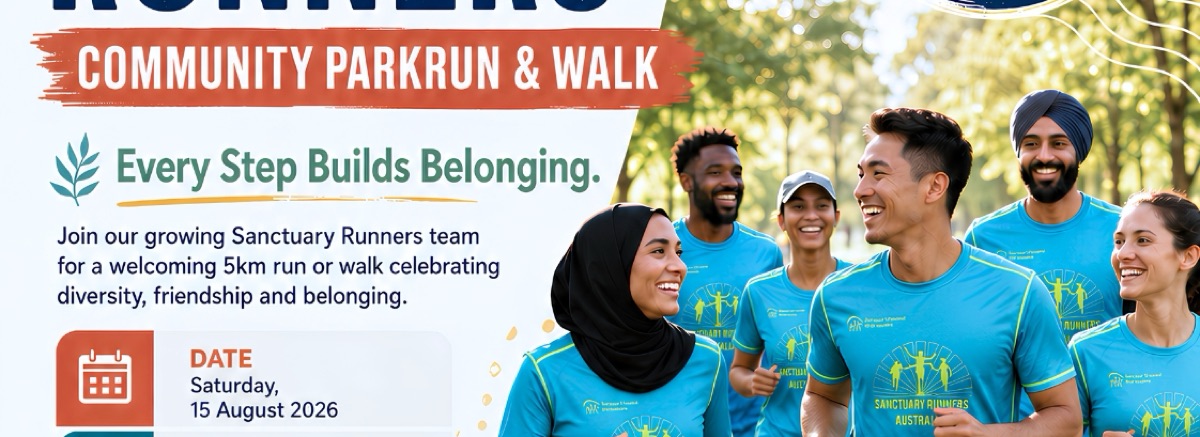
parkrun group

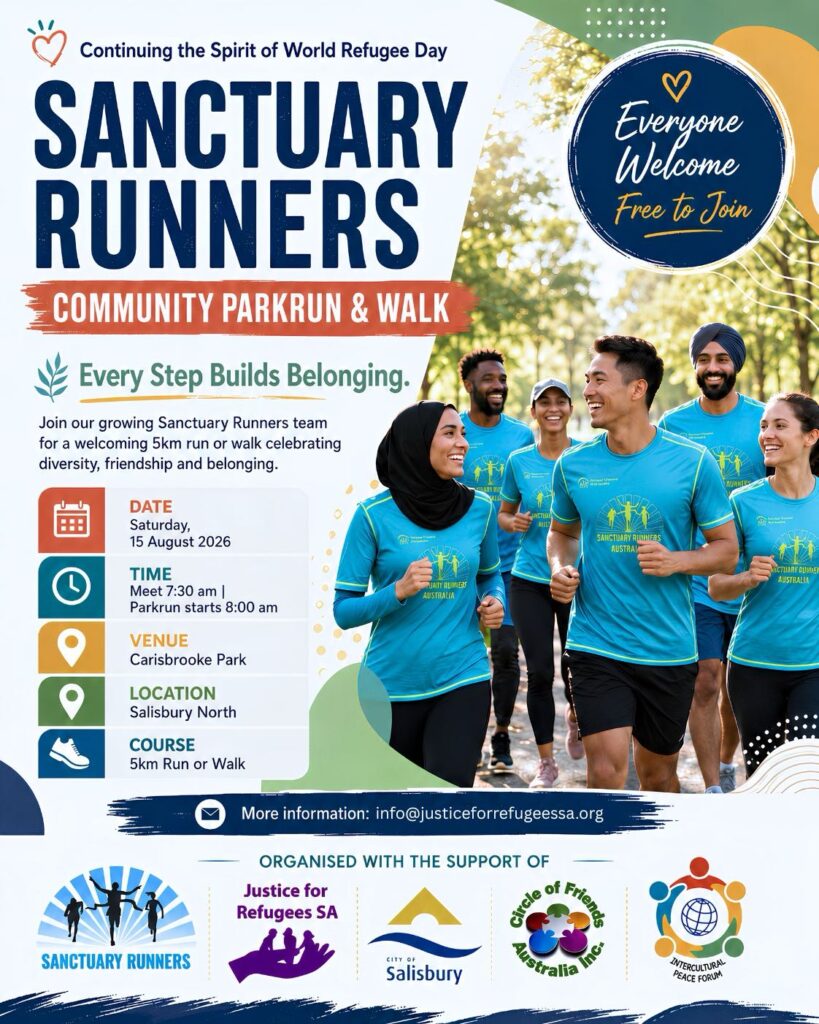
Run or walk together at Carisbrooke Parkrun, Salisbury on World Refugee Day

Join us on World Refugee Day for a special community parkrun celebrating diversity, inclusion and belonging.

As part of Refugee Week 2026, people of all backgrounds are invited to come together to run, jog or walk the 5km Carisbrooke parkrun. Whether you’re an experienced runner, a casual walker or simply looking to meet new people, everyone is welcome.

Inspired by the Sanctuary Runners movement, this event aims to foster connection between refugees, migrants and the wider community through the simple act of moving together.

Event Details

Date: Saturday 20 June 2026

Time: 7:30am

Location: Carisbrooke Park, Salisbury Park (Main North Road)

Meeting Point: Look for the Justice for Refugees SA banners near the Carisbrooke car park.

What to Expect

  • Free 5km community parkrun
  • Walk, jog or run at your own pace
  • Meet people from diverse backgrounds
  • Celebrate Refugee Week and World Refugee Day
  • Family-friendly and open to all ages

WALK OR RUN: Join us for the 5km Carisbrooke parkrun, a free event organised by local volunteers. Run, jog or walk at your own pace. If you haven’t participated in a parkrun event before, please register and get a barcode at www.parkrun.com.au

Open to everyone who wants to celebrate our richly diverse and inclusive community –Australians of all backgrounds and cultures.

Event Partners: This free event is a collaboration between Justice for Refugees SA, the Carisbrooke Parkrun, the City of Salisbury Council, Circle of Friends Australia (COFA) and Welcoming Australia to celebrate Refugee Week.

Our Inspiration: We are inspired by Sanctuary Runners; a movement started in Ireland in 2018 to use running and walking to connect people seeking asylum, newly arrived refugees and migrants, and Irish people of all backgrounds. Sanctuary Runners Australia began in Sydney in March 2026, with the support of Refugee Council of Australia. We aim to form South Australia’s first Sanctuary Runners group soon.

More Information:

Email Meredith Edwards of Justice for Refugees SA or phone the City of Salisbury on 84068368.

New Circle: Forgotten Refugees Support Circle

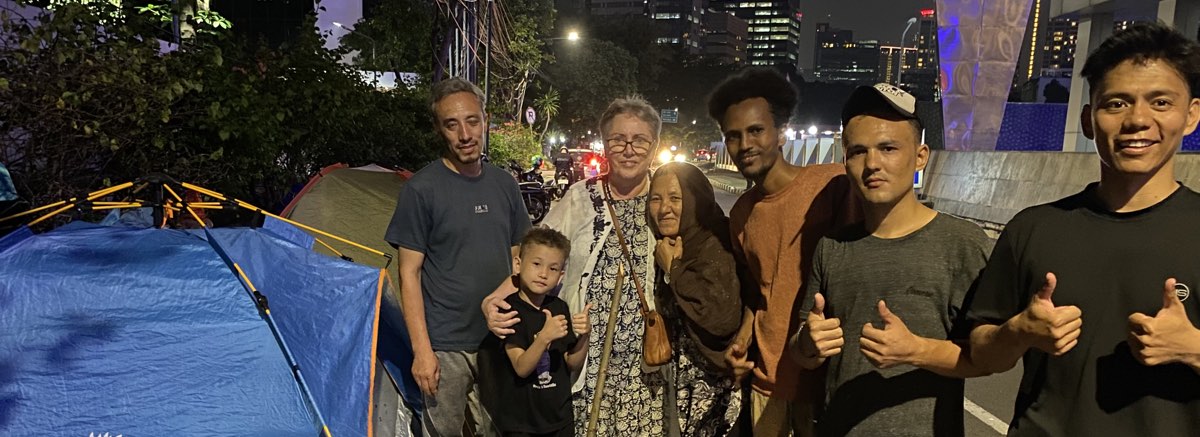
Circle 139 members in Indonesia with refugees

Circle of Friends Australia’s newest Circle is the Forgotten Refugees Support Circle (Circle 139) and our first Brisbane based Circle.

This is the Circle’s description of their work:

Who are we?

We are a group of Brisbane volunteers (plus valued supporters from interstate) working to house, feed, and care for otherwise destitute refugees trapped in Indonesia. This cohort are without allowances, work rights, access to healthcare or timely long-term resettlement options.  We also plan to resettle skilled work ready refugees by sponsoring them under Refugee Skills Visas

Who are the ‘Forgotten Refugees’ in Indonesia?

Whilst visiting Indonesia, we initially got to know refugees living rough in the street, in front of UNHCR in Jakarta. These people either lost their very small allowances from UNHCR because of severe budget cutbacks, or family back home were unable to continue supporting them because of their own poverty. Some never had an allowance, and others had left IOM centres on other Islands because of unaddressed mental or physical issues and came to the UNHCR office wrongly believing they might be helped.

This cohort are comprised of mainly Afghan and Pakistani Hazaras, plus Somalis, Sudanese, Rohingya, and a scattering of others.  Most are men alone, who have fled for their lives or been sent out by their families. More recently we are seeing Somali and Sudanese families. Invariably they’ve fled war and persecution in their own countries and are seeking a place of refuge.  Ultimately all seek to re-establish their lives in a third country where they can work to support their families, either back home or elsewhere, and ultimately seek to reunite with them.

What do we do?

Firstly, we provide funding for housing, food, other necessities of life, and (when we can fund it) health care.  We encourage the refugees to share their skills and resources for mutual support including education initiatives run by refugees for refugees. We aim to visit Indonesia annually to meet, support better understand their needs.  These visits are paid for by volunteers out of their own pocket to ensure all donor funds go exclusively to refugees.  At present our core group of 8 regular monthly financial donors provide ongoing support to just over ~45 people.

In addition, generally by a special appeal, we support some of the Indoneisan cohort’s close family who are refugees elsewhere, such as Iran or Pakistan.

Secondly, in the medium to longer term we are aiming to sponsor resettlement of some refugees in Australia by accessing Refugee Skills Visas and finding suitable employers for work ready individuals (particularly in the building industry that is crying out for skilled labour in Qld)

Finally, we work to lobby our government to increase the refugee intake and lift the mandatory ban on refugees that arrived in Indonesia after 1 July 2014.   We particularly seek a government commitment to resettling long-term refugees stranded in Indonesia, many living without hope or support on the margins for over 10 years.

How can you get involved?

  1. Join our group The ‘Forgotten Refugees’ Support Circle
  2. Financially support our ongoing work regularly (monthly preferred), or make a one-off donation to one of our special appeals – all donations are fully tax deductible.
  3. Pledge a gift or interest-free loan to finance refugee resettlement under Refugee Skills visas, and ultimately family reunion visas – all gifts are fully tax deductible, as are gifts to our revolving no interest loan fund. The latter fund allows loans to refugees for resettlement costs that are repayable to the fund to be loaned out again. These funds are never to be repaid to the original donor.  Repayable loans are also possible but are not tax deductible.
  4. Lobby your Federal member to urge adoption of a more generous refugee policy

For more information you can contact the Convenor  Erica Lloyd-Smith or Treasurer  Ralph Lloyd-Smith.

refugees living on streets in Indonesia