About Justice for Refugees SA

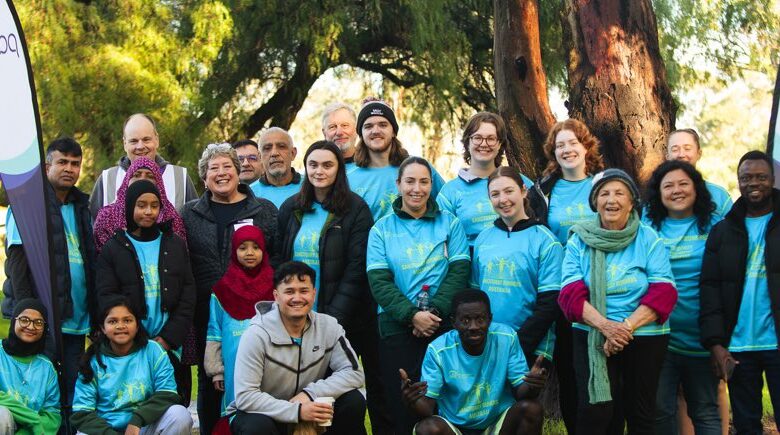
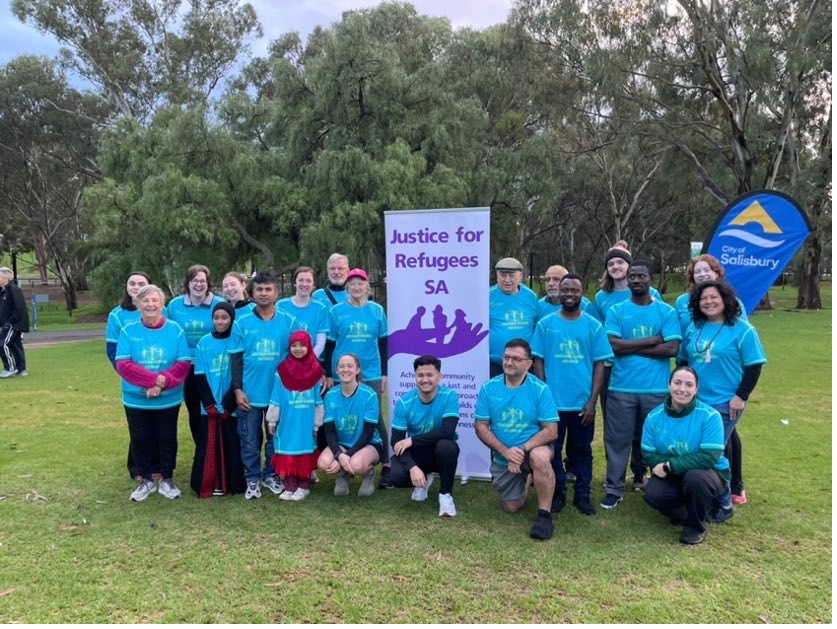
Group of people at Parkrun

by Meredith Edwards OAM, Chairperson Justice for Refugees SA

Justice for Refugees SA (J4RSA) was formed at a public meeting in Adelaide on 26 February 2002, in response to widespread concern about government policies and actions towards refugees and people seeking asylum. The organisation ceased in 2007, following improvements in refugee policy but reformed in June 2015 in response to the re-emergence of the unjust treatment of refugees. We are in the process of documenting the history of Justice for Refugees SA and its evolving links with COFA since 2002.  If you have any information, please email Meredith Edwards.

J4RSA advocacy is informed by the United Nations Human Rights charter.  For many in the field of working with and supporting refugees recently arrived in Australia, Circle of Friends Australia (COFA) provides the wrap-around support while Justice for Refugees SA us focused on policy advocacy through writing letters, submissions and visiting politicians, along with raising public awareness of the plight of refugees and people seeking asylum.

We are a non-partisan and not for profit group which links with other advocacy groups throughout Australia such as the Refugee Council of Australia (RCOA), the Asylum Seeker Resource Centre (ASRC). Australian Refugees Advocacy Network (ARAN) and the Permanency and Family Reunion Network. Such Australia-wide advocacy has seen significant successes in:

  • People on temporary visas being given a pathway to permanency through Safe Haven Enterprise Visas (SHEVs); many of whom have now gained Australian citizenship
  • People previously failed under an unfair refugee claims system called “Fast Track” are now being granted a pathway to permanency in Australia
  • Greater public awareness of the reasons why people seeking asylum are forced to leave their home country and the constraints they face settling into Australia.

The need to advocate for fair of refugees and people seeking asylum is as important now as it was in 2002; particularly with the rise of anti-migrant sentiments in some sectors of Australian Society.

Our current priorities for advocacy are:

  • In the long term, securing permanency for those refugees who had been medically evacuated to Australia from Nauru who do not currently have a pathway to permanency. They are regarded as “transitory” and do not have access to the same supports as other refugees. In the short-term we advocate for them to gain access to tertiary education and have uninterrupted access to Medicare, despite delays in the processing of visa renewals
  • Raising awareness of factors impacting on refugees, both in Australia and those placed offshore

For more details about our advocacy, check our new website and follow us on our Justice for Refugees SA Facebook page.

Justice for Refugees SA is also promoting a Refugee Council of Australia initiative to create a greater sense of belonging for refugees, asylum seekers and migrants called Sanctuary Runners.  We have had two successful parkruns at Carisbrooke Park in Salisbury North.  There is more information on our website about how to become involved. The T-shirts are free.
Community Refugee Integration and Settlement Pilot: New Program, Familiar Faces

by Bob Wilson, COFA Committee

You may have caught the announcement last month: the Community Refugee Integration and Settlement Pilot — CRISP to its friends — has officially become a permanent part of Australia’s humanitarian migration program, effective from 1 July 2026.

It’s run by Community Refugee Sponsorship Australia (CRSA) in partnership with the Commonwealth government. Since 2022, it has matched more than 950 refugee newcomers with trained Community Supporter Groups in every state and territory.

An independent evaluation by the University of Queensland found the settlement outcomes genuinely impressive.

Read the model again and see if it doesn’t ring a bell. Five or more volunteers, welcoming a household from the day they land, sticking with them through that hardest first year of settlement. That’s not a new commitment to us. That’s what we commit to as active members of a COFA circle.

It’s not entirely a coincidence, either. COFA joined CRSA as a Supporting Community Organisation back in December 2025. The CRSA team out of Sydney will continue to run engagement events here in Adelaide, South Australia annually.

So the door’s already open — the question our Management Committee is chewing over now is how far our Circles, new and established, will go with it.

Three paths are on the table.
Our larger, more established Circles could register directly with CRSA as a Community Supporter Group, taking on a newcomer household from the moment of arrival. This might be a step too far for some groups as their ongoing commitments to their current set of clients might take all their resources and time.

Or a COFA Circle could partner with a new or existing CRSA group, backing them with fundraising and on-arrival support rather than running the whole show.

Finally, we could actively seek to set up and register new Circles of enthusiastic newbies and seasoned COFA members to take on this challenge.

My own hunch is that it’s worth chasing the first option where a circle has the numbers and the appetite for it — it puts our experience exactly where it’s most useful, welcoming a family from day one.

But there’s a genuine role for the second as well, and probably no reason a circle couldn’t do a bit of both.

It’s a case of a national program finally catching up with what a handful of us have been doing around kitchen tables for years. If your circle wants to talk it through, grab me or drop the committee a line — five volunteers and a spare room’s worth of goodwill, and you’re most of the way there already.

Welcoming Refugees through Community Sponsorship

Circle of Friends Joins the Movement

Circle of Friends Australia has always stood for compassion, kindness and practical support for asylum seekers and refugees. We’re excited to share that we are now joining a growing national movement as a Supporting Community Organisation with Community Refugee Sponsorship Australia (CRSA).

What is Community Sponsorship?
Community sponsorship is a powerful model that enables everyday citizens to play an active role in in welcoming and supporting newly arriving refugees. Instead of leaving settlement solely to government services, local volunteer groups provide hands-on assistance, friendship, and connection. Community sponsorship is not new or unique to Australia. It is part of a global movement that began in Canada and now spans countries worldwide in Europe, the UK and South America.

About CRSA and the CRISP Program
CRSA currently leads the community sponsorship movement in Australia through the Community Refugee Integration and Settlement Pilot (CRISP), launched in 2022. This program has been made a permanent part of Australia’s humanitarian migration program by the government.

The CRISP empowers groups of volunteers – called Community Supporter Groups – made up of 5 or more individuals from the same local area, to provide practical support to a refugee household throughout their first 12 months in Australia. This involves meeting the newcomers at the airport and assisting with things like finding housing, registering for Centrelink and Medicare, local orientation to the community and support with education and employment. Refugees are referred by UNHCR and accepted for settlement via the CRISP on the basis of not having existing links in Australia.

Watch the short video below showing one family’s journey to safety and belonging through the CRISP, welcomed to Airey’s Inlet on Victoria’s Surf Coast.

Since its inception, almost 900 refugee newcomers have arrived in Australia through the CRISP, welcomed by over 180 Community Supporter Groups in every state and territory, including Circle of Friends members in South Australia.

Circle of Friends Joins the Cause
By joining CRSA as a Supporting Community Organisation, Circle of Friends adds our voice to the call for compassionate, community-driven responses to refugee settlement. Together, we can amplify the message that welcoming refugees strengthens our communities.

Learn More & Get Involved
CRSA will be visiting Adelaide in February 2026 for a series of community engagement events – we will share these details with you as they become available and encourage our members to attend an event to learn more and see how you can get involved.

In the meantime, we encourage you to consider forming a Community Support Group to welcome refugee newcomers through the CRISP. To learn more about the CRISP and what’s involved, visit the CRSA website.

For questions or more information, contact the CRSA team directly by email.

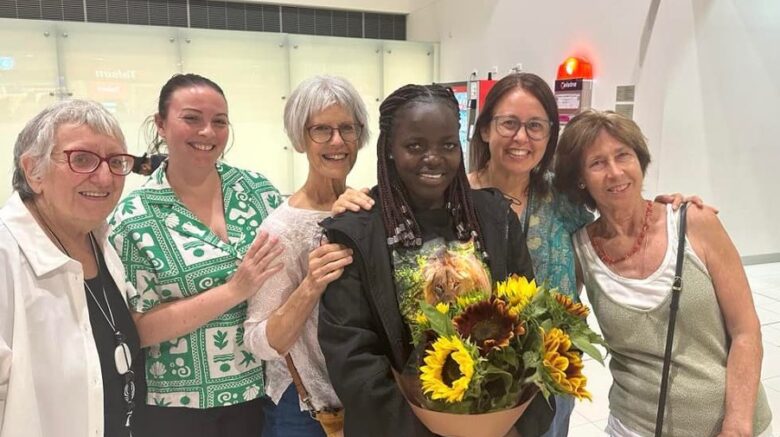
Image: Perth Community Refugee Support Group welcome Josephine Taban, originally from South Sudan, at Perth airport in December 2023.

Circle of Friends helps bring Afghani teacher and her daughters to safety

We are pleased to share some good news with the arrival of Afghani teacher Laila and her daughters in Adelaide last month. Their immigration to Australia was sponsored by Circle of Friends through the Community Support Program Visa where individuals within the community cover the relocation costs for refugees trying to establish themselves in Australia. The application was spearheaded by Mij Tanith and supported by other local Circle of Friends members. After many fundraising efforts they were able to raise the necessary funds of over $60 000 and submit paperwork to the Australia Government. What followed was many months of delays and hurdles before Laila and family were finally able to gain the Visa and make the journey to Australia.

You can read more of this story on ABC News ‘Afghan teacher migrates to Adelaide with five daughters after ‘huge’ community crowdfunding effort‘.

Well done to the Adelaide Circle of Friends group and all their supporters that made this possible and we all wish Laila and her children all the best as they adjust and settle into their new home.

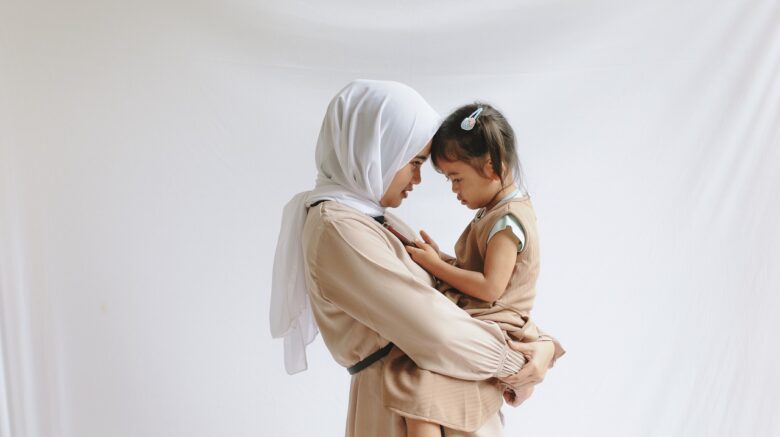
Photo courtesy of IqbalStock on Pixabay

A Cry Went Up in the Desert: Documenting Woomera Detention Centre

The book ‘A Cry Went Up in the Desert’ provides a unique eye-witness account of the impact of the Australian Government’s policies towards asylum seekers and those who advocate for them over the period of late 1999 – 2000. These policies and actions sadly continue to reverberate and impact asylum seekers in Australia over twenty years later.

In this important book documenting the early stages of Woomera Detention Centre, editor Margaret Gunn has reproduced, with permission, a series of letters she received from  Rev Dr Tom Atherton of his attempts to advocate for people detained at Woomera.

The books editor Margaret Gunn has provided the following summary of the book:
In late 1999 the United Protestant Minister Rev Tom Atherton was living at Woomera and so saw first-hand the building of this centre and was at the receiving end of backlash against people who advocated for the people detained in the centre. At this time 800 or so American service-people were completing a rotation at the Woomera space research base when the detention centre began to be constructed in the area. Surprised by this new development, both the Rev Atherton and the local Catholic priest’s first response was to publicly ask the Minister for Immigration for air-conditioning in the 1950s brick huts on the Woomera town construction site which were to be used to house the initial 400 or so men, women and children from Iraq, Iran, Afghanistan and Pakistan.


“The picture I have is of a prison-like enclave in the desert in which the 1,500 residents have rights which no one tells them about (right to legal advice, for example). They are involved in a process of evaluation of their refugee status but no one tells them about the process… and they have no idea when a decision will be made…” –  Rev Dr Tom Atherton, 13th June 2000

In response the Minister himself led the onslaught which enveloped Tom with the Minister of Immigration seeing the request for habitable accommodation being an unwelcome interference. This personal attack of exacerbated by Sydney shock-jock John Laws.

When Margaret wrote a letter of encouragement to Tom he responded and this began a 6-month exchange of emails where Tom documented confidentially his first-hand experience of doing what he could to help the detainees and guards at the detention centre.  Later Rev Atherton would say that Margaret’s letter of encouragement was the only positive letter he received amidst a torrent of hate-mail.

“I feel the need to tell this stuff confidentially to someone and you have been elected unopposed.” – Rev Dr Tom Atherton to Margaret Gunn, 25th May 2000

The 36 emails that Tom sent to Margaret were saved on her computer and recently she sought and received permission from Tom and his wife Judith to share them publicly.

As journalist Peter Mares writes of the resulting book:

“These important documents [are] a reference point for others, including future generations, to better understand, at a personal and visceral level, the pain and anguish inflicted by Australia’s immigration detention regime.”

‘A Cry Went Up in the Desert’ was published in 2023 and is available for purchase from the publisher MediaCom Education.