
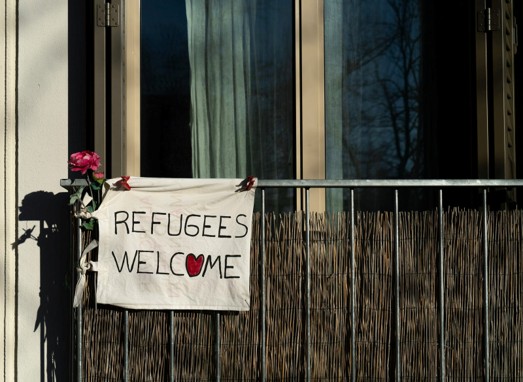
Over the last few weeks, Judi and I have been on a mid-year break, visiting family and friends interstate. The travel was fun — by plane, then train, then car.
As we loitered in the main street of a small country town, my attention was drawn to a poster on the noticeboard outside the Community Hall. Refugee Week 2026: A Million Stories. Someone had blu-tacked it slightly crooked, which felt about right for this year’s celebration. Nobody straightened it. People had other things on their minds.
It is June, and in Australia that means winter — cold mornings, shorter days, and the particular kind of political chill that has been settling over the immigration debate for the better part of two years. The newspapers and internet feeds scream numbers at us. Migration caps. Net overseas arrivals. Housing shortages blamed on the wrong people in the wrong tone of voice. Politicians competing to sound toughest on borders, as if compassion were somehow a character flaw.
Into all of that, quietly, Refugee Week arrives — as it always does.
This year it carries extra weight. Forty years ago — November 1986 — a couple of hundred people walked through Sydney in a street procession that nobody much noticed. Afghan families. Eritrean families. Vietnamese families. A picnic in the Domain afterwards, organised by a small charity called Austcare and a retired army general who thought the world should do better. It was a modest beginning for something that would eventually spread to more than twenty countries. Australians, it turned out, have a talent for welcome — even if their governments and elected politicians sometimes forget it.
And now, in 2026, Australia has just issued its one millionth humanitarian visa since the end of the Second World War. One million people who fled something — war, persecution, the particular terror of having no good options — and arrived on these shores to begin again.
One million stories, most of them unknown to the people sitting next to them on the bus, in the waiting room, at the school gate.
Even on holiday, with my laptop closed on the desk at home, the WhatsApp messages find me. A family waiting patiently in Iran for their Australian refugee visas after escaping the trauma of Afghanistan. Then, suddenly, one morning, officials arrive at their door with the news that they can no longer stay. Bundled onto a bus heading towards a border they never wanted to cross again, they are now back in hiding in their own country, reaching out again for help. I have nothing to offer except short messages of concern — and the hollow feeling that comes with pressing send.
I’ve been thinking about that number ever since. One million. It makes me go quiet.
I’ve been volunteering with COFA and CRSA long enough to know that behind every statistic is a Tuesday afternoon at my desk. A form that doesn’t make sense, submitted to a bureaucracy nobody asked them to understand. A home visit where a child does homework at the kitchen table while her parents try to decode a Centrelink letter. Conversations online or in person with families who made it, and families still waiting — and the complicated feelings that live in the space between those two sentences.
There are days when the gap between those two sentences feels like a chasm.
That family in Iran — let’s call them the family I cannot help — are not a statistic. They are a father who once had a job to support his family, a mother who once had a kitchen, children who once had a school. They escaped one country at war, waited patiently in another, and were then bundled onto a bus towards a border they never wanted to cross.
My WhatsApp response took about forty seconds to type. I stared at it for a long time before I pressed send. Thinking of you. Stay safe. We are here. Three sentences that meant everything and changed nothing.
This is the quiet shame of Refugee Week — the part that doesn’t appear on the posters.
And yet.
Forty years of this week happening — stubbornly, reliably, on the same patch of the calendar every June — tells me something. It reminds me that Australians keep showing up. Not the politicians, not always. But the people. The volunteers. The community circles. The retired army general in 1986 who thought a picnic in the Domain was worth organising. The COFA members in Adelaide who have been sitting across kitchen tables from newly arrived families for more than two decades, helping them decode the forms and the systems and the silences.
One million humanitarian visas. One million Tuesday afternoons.
I straightened the poster in my mind as we walked on down the main street of that small country town. Judi walked quietly by my side. The winter sun was pale and thin, but it was there. Somewhere on the other side of the world, a family I cannot help right now is waiting again. Somewhere in Adelaide, a family I can help was also waiting — and next week I would be back at my desk.
That will have to be enough. For now, it is.
Bob Wilson